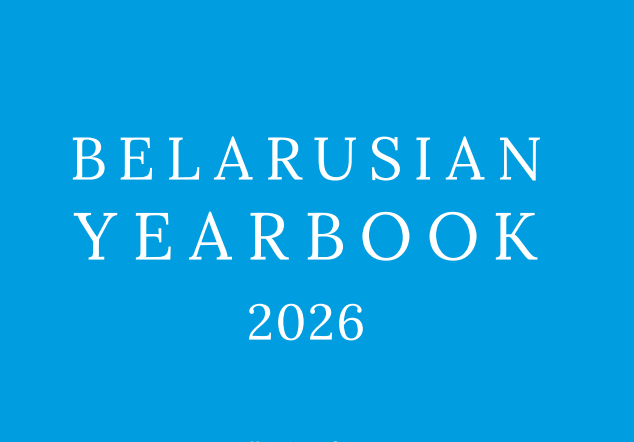
The Belarusian Yearbook 2026 provides policymakers, diplomats, researchers and international institutions with a comprehensive independent assessment of the political, foreign policy, societal and economic developments that shaped Belarus in 2025.
Published under the aegis of the Belarusian Expert Network “Nashe Mnenie” (Our Opinion) — the Agency for Social and Political Expertise, which has brought together independent Belarusian expertise since 2003 — the Yearbook offers a consolidated analytical resource for those working on Belarus, Eastern Europe, European security and relations with Russia.
IDSMBEE serves as an organisational partner in the production of the Belarusian Yearbook 2026, supporting the continued availability of independent Belarusian expertise for European and international policy communities.
IDSMBEE serves as an organisational partner in the production of the Belarusian Yearbook 2026, supporting the continued availability of independent Belarusian expertise for European and international policy communities.
Why the Yearbook matters
Belarus is increasingly relevant to a number of interconnected European policy challenges: regional security, Russia’s geopolitical and military influence, sanctions policy, democratic resilience, relations with Belarusian society and democratic actors, economic dependence and the future security architecture of Eastern Europe.
For European institutions and governments, understanding Belarus solely through the prism of Russia risks overlooking important domestic political, societal and economic dynamics.
The Belarusian Yearbook 2026 provides the broader analytical context needed to assess these developments.
It brings together Belarusian experts working across political science, economics, international relations, civil society, media, education, religion and security to examine not only individual events, but also the structural trends behind them.
For European institutions and governments, understanding Belarus solely through the prism of Russia risks overlooking important domestic political, societal and economic dynamics.
The Belarusian Yearbook 2026 provides the broader analytical context needed to assess these developments.
It brings together Belarusian experts working across political science, economics, international relations, civil society, media, education, religion and security to examine not only individual events, but also the structural trends behind them.
Key areas of analysis
State and political institutions
The Yearbook examines the further consolidation of Belarus’s political system, the role of the Presidential Administration, changes within government and parliament, the growing weight of the security apparatus and developments at the level of local authorities.
The Yearbook examines the further consolidation of Belarus’s political system, the role of the Presidential Administration, changes within government and parliament, the growing weight of the security apparatus and developments at the level of local authorities.
Belarus, Russia and European security
Several chapters address Belarus’s changing international position, including:
Several chapters address Belarus’s changing international position, including:
- Belarus–Russia relations and the multiple dimensions of Belarusian dependence on Moscow;
- Belarus in European Union policy;
- Belarus–United States relations;
- relations with China;
- Belarus’s engagement with other post-Soviet and non-Western states.
Society under authoritarian pressure
The Yearbook assesses the relationship between the state and society, the condition of Belarusian civil society and democratic forces, transformations in the media environment, developments in education and science, religious policy and cultural life.
Particular attention is paid to how Belarusian society continues to adapt under conditions of repression, political control, emigration and increasing integration into Russia’s information and institutional space.
The Yearbook assesses the relationship between the state and society, the condition of Belarusian civil society and democratic forces, transformations in the media environment, developments in education and science, religious policy and cultural life.
Particular attention is paid to how Belarusian society continues to adapt under conditions of repression, political control, emigration and increasing integration into Russia’s information and institutional space.
Economy and structural vulnerabilities
The economic section examines:
A resource for the European policy community
The economic section examines:
- macroeconomic developments;
- financial-sector stability and vulnerabilities;
- energy policy and dependence;
- developments in the real economy.
A resource for the European policy community
The Belarusian Yearbook 2026 is particularly relevant for:
The Yearbook is designed not as a snapshot of individual events, but as an analytical record of the structural processes reshaping Belarus and its position in Europe.
- EU institutions and Member State governments working on Belarus, Eastern Partnership, enlargement, sanctions and European security;
- embassies and diplomatic missions requiring structured country analysis and background information;
- European think tanks and research institutions studying Belarus, Russia, Eastern Europe and authoritarian resilience;
- international organisations and foundations developing programmes related to Belarusian civil society, democracy and regional security;
- policymakers and parliamentary staff requiring expert assessments that go beyond daily news cycles;
- and researchers and journalists looking for a consolidated reference source on developments in Belarus.
The Yearbook is designed not as a snapshot of individual events, but as an analytical record of the structural processes reshaping Belarus and its position in Europe.
Access the Belarusian Yearbook 2026
The publication is available free of charge in Belarusian–Russian and English editions, in HTML, PDF and EPUB formats.
Read online — HTML:
Belarusian–Russian edition
Read online
English edition
Read online
Download — PDF
Belarusian–Russian edition
Download PDF
English edition
Download PDF
Download — EPUB
Belarusian–Russian edition
Download EPUB
English edition
Download EPUB
Read online — HTML:
Belarusian–Russian edition
Read online
English edition
Read online
Download — PDF
Belarusian–Russian edition
Download PDF
English edition
Download PDF
Download — EPUB
Belarusian–Russian edition
Download EPUB
English edition
Download EPUB